

Cryptids: A Field Guide to Modern Monster Legends
Eyewitnesses vary. Photographs blur.
The footprints remain concerning.
Cryptids belong to modern folklore: creatures reported through sightings, legends, local accounts, blurry photographs, eyewitness stories, and the occasional deeply suspicious camping trip.
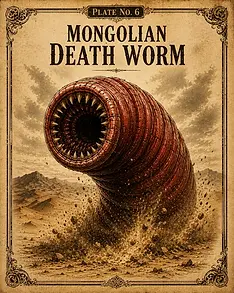
This guide covers Bigfoot, the Loch Ness Monster, Mothman, Chupacabra, Yeti, Wendigo, Jersey Devil, Bunyip, Mongolian Death Worm, and other creatures that live somewhere between myth, rumor, and “my cousin swears he saw it.”
Curious which cryptids are most dangerous? Start with our guide to the most dangerous cryptids, from the Wendigo and Mothman to the Chupacabra, Yeti, and Mongolian Death Worm.


What Makes a Cryptid Dangerous?
A cryptid is not dangerous just because it is large or aggressive. Some are dangerous because they are hard to prove, hard to avoid, or hard to understand.
-
The most dangerous cryptids usually have at least one of these traits:
-
They appear in remote places where help is far away.
-
They are tied to fear, disappearance, or disaster.
-
Their abilities are unclear or exaggerated.
-
Their stories change from witness to witness.
-
They occupy places people already find unsettling: deep woods, dark water, empty roads, deserts, mountains, and abandoned places.
This is why cryptids are so effective as modern monster legends. They live in the gap between evidence and fear.
Are Cryptids Real?
Cryptids are real as folklore, even when their physical existence is unproven. That distinction matters. A cryptid does not need to be scientifically confirmed to shape local identity, inspire sightings, influence tourism, appear in warnings, or become part of modern myth.
Some cryptid stories may come from misidentified animals, exaggerated encounters, hoaxes, or cultural memory. Others remain open mysteries. The legend survives because people keep seeing something, hearing something, or wondering what might be hiding just beyond the edge of the trail.
Cryptids vs Mythological Creatures
Cryptids and mythological creatures overlap, but they are not exactly the same.
Mythological creatures usually come from older religious, cultural, or literary traditions. Examples include the Hydra, Griffin, Phoenix, Minotaur, and Medusa.
Cryptids usually come from modern sightings, regional folklore, eyewitness accounts, and unexplained reports. Bigfoot, Mothman, Chupacabra, Nessie, and the Yeti belong more strongly to this category.
A mythological creature often lives in the ancient story. A cryptid feels like it could appear in tomorrow’s news.
Cryptid FAQs
What is the most famous cryptid?
Bigfoot is probably the most famous cryptid, especially in North America. The Loch Ness Monster, Mothman, Yeti, Chupacabra, and Jersey Devil are also among the best-known cryptids in modern folklore.
What is the most dangerous cryptid?
The Wendigo is often treated as one of the most dangerous cryptids because it represents hunger, corruption, winter, and the loss of humanity. Mothman, Chupacabra, Mongolian Death Worm, and Bigfoot can also be considered dangerous depending on the version of the legend.
Check out our full guide to the Most Dangerous Cryptids.
Is Mothman dangerous?
Mothman is not always dangerous in a direct physical sense. In many stories, Mothman is frightening because it appears as an omen or warning before disaster. Its danger comes from uncertainty: no one knows whether it causes events, predicts them, or simply appears near them.
Is Bigfoot dangerous?
Bigfoot is usually portrayed as mysterious rather than openly evil. Some stories describe Bigfoot as shy, territorial, or defensive. Others imagine it as powerful enough to be dangerous if approached, threatened, or cornered.
What are the Loch Ness Monster’s weaknesses?
The Loch Ness Monster’s biggest weakness is usually its dependence on deep water. If Nessie exists as a lake creature, it would be strongest in its own environment and far more vulnerable outside it. Its mystery is also part of its power. The less visible it is, the more the legend grows.
Are cryptids monsters or animals?
Cryptids can be described as either monsters or unknown animals, depending on the story. Bigfoot and the Yeti are often treated like undiscovered animals. Mothman and Wendigo feel more supernatural. Chupacabra sits somewhere between predator, monster, and modern panic.
Why are cryptid photos usually blurry?
Blurry cryptid photos are part of the genre. Sightings often happen at night, from a distance, during panic, or in remote places where conditions are poor. The blur also adds to the mystery. A clear photo might end the legend. A bad photo keeps it alive.
What is the difference between a cryptid and a monster?
A monster is any frightening or unnatural creature. A cryptid is more specific: it is a creature known through sightings, folklore, rumors, and disputed evidence. All cryptids can be treated like monsters, but not all monsters are cryptids.
Where do most cryptid legends come from?
Cryptid legends often come from local sightings, regional folklore, unexplained animal encounters, oral storytelling, newspaper reports, hoaxes, tourism, and communities trying to explain something strange in the landscape.
Why do cryptids still fascinate people?
Cryptids fascinate people because they make the modern world feel mysterious again. They suggest there may still be something hidden in the forest, under the water, across the desert, or just outside the reach of proof.