

Mythic Creature Guides
Field guides for creatures best studied from a safe distance.
The Legends of Myth guide archive organizes the world’s most infamous mythical creatures, monsters, cryptids, spirits, sea beasts, hybrid animals, and legendary horrors into searchable field guides.
Some guides focus on mythology.
Some focus on habitat.
Some focus on danger.
Some focus on family lineage (like the unfortunate Typhon family reunions including Cerberus, Hydra, and Chimera).
If the bestiary profiles are the individual creature records, these guides are the map of the archive. They help you explore how legendary creatures connect across cultures, environments, powers, weaknesses, and the many ways humans have explained the thing they definitely saw in the dark.
Start With the Main Field Guides


Mythical Creatures
The complete starting point for the Legends of Myth archive.
Explore aerials, sea monsters, cryptids, Greek beasts, underworld guardians, hybrid creatures, cursed beings, spirits, and other legendary entities humanity has chosen to document instead of wisely ignoring.
Best for:
Readers who want the full archive overview.
Greek Mythological Creatures
Ancient Greece produced some of mythology’s most famous monsters, including Medusa, Hydra, Cerberus, Chimera, Cyclops, Minotaur, Sirens, Sphinx, and several creatures whose existence suggests the gods were not especially interested in public safety.
This guide organizes the major creatures of Greek mythology by role, origin, threat level, and heroic encounter.
Best for:
Readers interested in Greek monsters, heroes, gods, and legendary trials.

Cryptids
Cryptids belong to modern folklore: creatures reported through sightings, legends, local accounts, blurry photographs, eyewitness stories, and the occasional deeply suspicious camping trip.
This guide covers Bigfoot, the Loch Ness Monster, Mothman, Chupacabra, Yeti, Wendigo, Jersey Devil, Bunyip, Mongolian Death Worm, and other creatures that live somewhere between myth, rumor, and “my cousin swears he saw it.”
Best for:
Interest in modern monster legends, sightings, folklore, and unexplained creatures.

Sea Monsters
The ocean is deep, dark, ancient, and apparently full of things with opinions about boats.
This guide explores the legendary sea monsters of myth and folklore, including the Kraken, Leviathan, Jörmungandr, Loch Ness Monster, Sirens, sea serpents, Scylla, Charybdis, and other creatures best observed from land.
Best for:
Readers interested in ocean mythology, lake monsters, serpents, shipwreck legends, and nautical horror.
Creature Lineage Guides
Some monsters are not isolated legends; They belong to larger mythological families, bloodlines, or divine catastrophes.
These guides trace the connections between related creatures and explain how mythology builds entire monster systems out of parents, siblings, curses, rivalries, and ancient grudges.
The Offspring of Typhon
Cerberus. Hydra. Chimera. Three of Greek mythology’s most dangerous monsters are traditionally connected as offspring of Typhon and Echidna, the father and mother of monsters.
This guide explores how Cerberus, Hydra, and Chimera function as siblings in the Greek monster tradition: one guarding the Underworld, one multiplying when attacked, and one proving nature should not be assembled without supervision.

Danger & Survival Guides
Not all mythical creatures are equally dangerous.
Some guard thresholds. Some destroy cities. Some lure sailors to their deaths. Some look at you once and turn your future into decorative stone.
The danger guides rank and organize creatures by threat level, survivability, powers, weaknesses, and whether an average human would have any realistic chance of escape.
The usual answer is no, but scholarship requires investigation.
Most Dangerous Mythical Creatures
A ranked field guide to the creatures most likely to end a heroic career early.
Includes monsters such as Hydra, Kraken, Medusa, Basilisk, Dragon, Leviathan, Cerberus, Chimera, Wendigo, and other legendary threats.
Who's the most dangerous? The hardest to kill?

Creature Type Guides
These guides organize mythical creatures by form, habitat, power, or role.
They are useful when you are less interested in one specific monster and more interested in categories like flying creatures, serpent beasts, hybrid monsters, underworld guardians, or creatures associated with death.

Dragon-Like Creatures
Not every dragon-like creature is technically a dragon. Some are serpents. Some are winged beasts. Some are divine world-ending entities. Some are medieval hazards with too many teeth.
This guide explores dragons, wyverns, hydras, basilisks, lindworms, Jörmungandr, sea serpents, and other scaled disasters.


Hybrid Beasts
Hybrid beasts combine traits from multiple animals, often in ways that suggest mythology looked at a lion, an eagle, a goat, and a serpent and thought, “This needs less regulation.”
This guide includes Griffin, Chimera, Sphinx, Manticore, Pegasus, Hippogriff, Centaur, Harpy, and other composite creatures.
Underworld Guardians
Some creatures do not wander the world. They guard thresholds.
This guide covers Cerberus, Garmr, hellhounds, black dogs, death omens, and other beings associated with the afterlife, gates, tombs, judgment, and places humans were not supposed to enter.
Culture & Mythology Guides
Every culture has its monsters, guardians, spirits, tricksters, and impossible beasts. These guides organize creatures by mythology, region, and storytelling tradition.
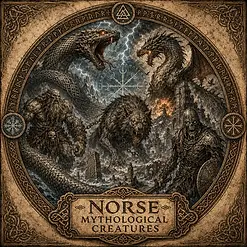
Norse Mythological Creatures
Exploring Jörmungandr, Fenrir, Níðhöggr, trolls, draugr, and Norse monster lore.
Japanese Mythological Creatures
Japanese folklore includes shape-shifting fox spirits, demons, river creatures, birdlike beings, snow spirits, cat monsters, and yokai of every emotional inconvenience.
This guide explores Kitsune, Oni, Tengu, Kappa, Yuki-onna, Nekomata, and other figures from Japanese myth and folklore.

Egyptian Mythological Creatures
Egyptian mythology includes divine hybrids, underworld devourers, serpents of chaos, sacred birds, sphinxes, and beings associated with death, judgment, rebirth, and cosmic order.
This guide explores Ammit, Apophis, the Sphinx, Bennu, Serpopard, and other Egyptian mythological creatures.

Celtic Mythological Creatures
Celtic folklore includes water horses, death omens, fairy beings, shapeshifters, headless riders, spectral hounds, and creatures that strongly suggest you should not follow singing into the mist.
This guide explores Banshee, Kelpie, Selkie, Dullahan, Cu Sith, and other creatures from Celtic tradition.

Mythical Matchups
The Mythical Matchups archive compares legendary creatures against one another using size, strength, speed, intelligence, supernatural abilities, weaknesses, environment, and estimated survival probability.
It is part scholarship, part field assessment, and part irresponsible question no one needed answered but everyone secretly wants to know.
Featured Matchups


How to Use the Legends of Myth
Guide Archive
If you are new to the archive, begin with the main Mythical Creatures guide.
If you know the culture you want, start with Greek, Norse, Japanese, Egyptian, Celtic, or another mythology guide.
If you know the type of creature, start with Sea Monsters, Cryptids, Hybrid Beasts, Dragon-Like Creatures, Flying Creatures, or Underworld Guardians.
If you are here to make a poor but entertaining survival decision, start with the danger guides.
If you are looking for a specific creature, visit the Bestiary.
The archive is designed to work in layers:
Guide pages explain the category (click for top of page).
☟
Bestiary profiles document individual creatures.
☟
Blog field notes investigate questions, matchups, theories, rankings, and strange mythology problems that deserve more attention than is probably healthy.


Frequently Asked Questions
What are Legends of Myth guides?
Legends of Myth guides are category pages that organize mythical creatures by culture, habitat, power, threat level, lineage, or creature type. They help readers explore the archive beyond individual bestiary profiles.
What is the difference between a guide and a bestiary profile?
A guide explains a group of creatures, such as Greek Mythological Creatures, Sea Monsters, or Cryptids. A bestiary profile focuses on one specific creature, such as Hydra, Kraken, Medusa, or Bigfoot.
What is the difference between a guide and a blog?
A guide is a permanent archive page built around a major topic or category. A blog is an editorial field note that explores a specific question, theory, ranking, comparison, or curiosity.
Where should I start?
Start with Mythical Creatures if you want the full archive overview. Start with Greek Mythological Creatures, Cryptids, or Sea Monsters if you already know the type of legend you want to explore.
Are cryptids considered mythical creatures?
Cryptids are often treated separately from ancient mythological creatures, but they function as modern folklore. Bigfoot, Mothman, Chupacabra, Yeti, and the Loch Ness Monster all belong naturally within a broader legendary creature archive.
Do the guides include creatures from different cultures?
Yes. The guide archive includes creatures from Greek, Norse, Japanese, Egyptian, Celtic, Latin American, and modern folklore traditions, with more cultural guides added as the archive expands.